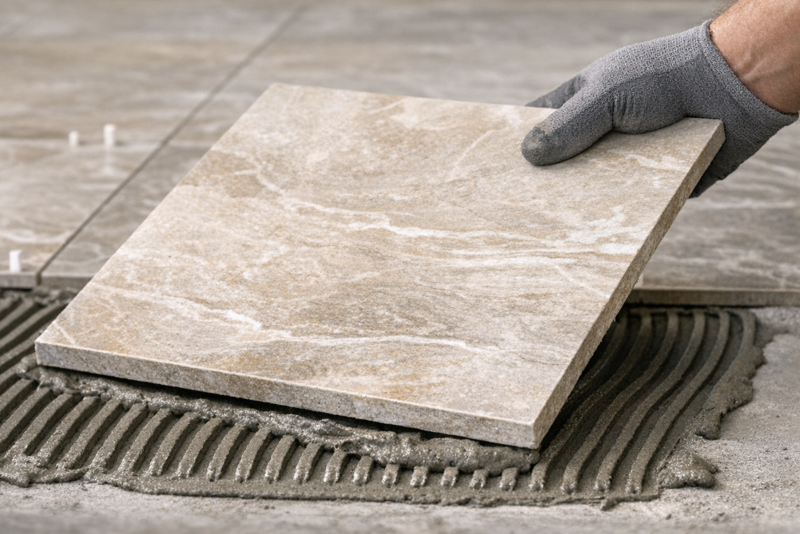
Different types of grout for natural stone
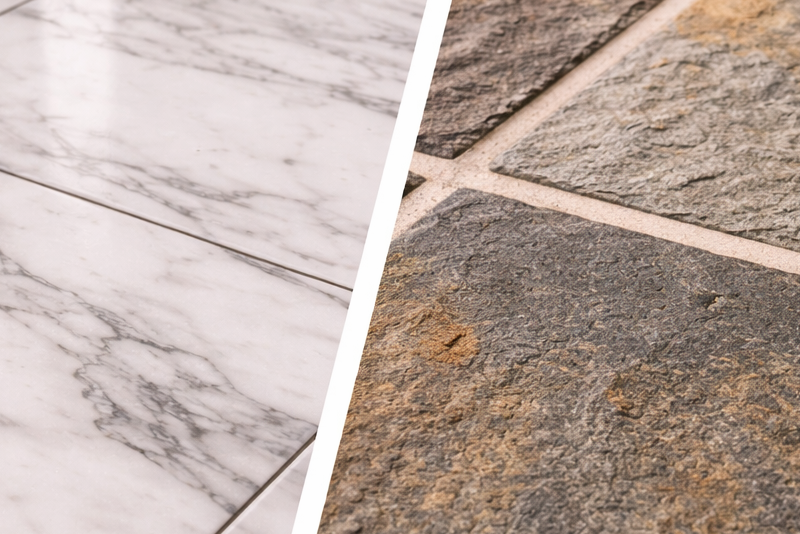
What kind of grout works best with natural stone?
Picking the right grout for natural stone is important if you want your installation to last and look good. Because natural stone has different levels of porosity, texture, hardness, and joint width, the right grout will depend on how it will be used.
Choosing the right grout can make marble, travertine, slate, limestone, or irregular natural stone more resistant to stains, easier to clean, and better protect the finished surface. This guide talks about the different types of natural stone grout, compares sanded and unsanded grout, and tells you when to use cementitious, epoxy, or pre-mixed grout.
How to Choose the Right Grout for Natural Stone Matters
Natural stone acts differently than ceramic or porcelain tile. Some surfaces are porous and soak up water quickly, while others are smooth and scratch easily. The width of the joints can also change a lot based on the type of stone and how it is installed.
If you pick the wrong grout, it could stain, shrink, crack, damage the surface, or require extra maintenance. Picking the right grout can make it last longer, look better, and work better over time.
Before you choose grout for natural stone, think about these things:
• Type of stone
• finish on the surface
• width of the joint
• exposure to moisture
• requirements for stain resistance
• What you should expect from maintenance
• Can be used inside or outside
Finding the right grout for natural stone means finding the right balance between performance and compatibility. Most of the time, the most important choice is whether the job needs cementitious grout, epoxy grout, or a new, pre-mixed option.
Need help choosing the best grout for natural stone?
Talk to our specialists for tailored advice on stone compatibility, joint width, durability, and installation performance.
Speak to an Expert?
Different Types of Natural Stone Grout
The most common types of grout for natural stone are:
• Grout made of cement
• grout made of epoxy
• systems for pre-mixed grout
Depending on the substrate, stone sensitivity, and performance needs, each option has its own set of benefits.
Cementitious Grout for Natural Stone
Cementitious grout is a popular choice for natural stone. It usually comes in powder form and needs to be mixed before use. It is popular because it is useful, easy to use, and works well on many types of walls and floors.
Cement grout for natural stone is a cheap and dependable option for many common projects. But it is usually more porous than epoxy grout, so it may need to be sealed and cared for from time to time.
Advantages of Cementitious Grout
• a lot of people use it and it's cheap
• works well for many common uses
• comes in both sanded and unsanded forms
• simple for many installers to use
Cementitious Grout's Drawbacks
• Has more holes in it than epoxy grout
• may need to be sealed
• can get dirty more easily in tough conditions
• Choosing the right type of grout is very important for performance.
Grout for Natural Stone: Sanded or Not Sanded
When picking grout for natural stone, one of the most important things to think about is whether to use sanded or unsanded grout.
Grout without sand for natural stone
Unsanded grout is smoother and is usually used for small joints. It is less likely to scratch delicate or polished stone surfaces because it does not have sand particles in it.
Unsanded grout is often good for:
• marble that has been polished
• limestone with thin seams
• finishes with smooth stones
• installations where protecting the surface is very important
The main problem is that unsanded grout isn't as good for wider joints because it can shrink or crack more easily.
Grout for Natural Stone That Has Been Sanded
Fine sand is in sanded grout, which makes it stronger and helps keep wider joints from shrinking. It is usually the best choice for natural stone floors, stone surfaces with texture, and installations with bigger gaps.
Sanded grout is often good for:
• tiles for slate floors
• Grout joints that are wider
• natural stone that has a rough or textured surface
• installations that need to be more resistant to cracks
However, sanded grout can scratch soft or polished stone surfaces, so it is highly recommended that you test for compatibility.
Which one is better for natural stone?
As a rule of thumb:
• Pick unsanded grout for thin joints and fragile stone.
• Pick sanded grout for joints that are wider and cracks that are stronger.
Is Epoxy Grout the Best Type of Grout for Natural Stone?
Epoxy grout is the best grout for natural stone in many high-performance situations. It doesn't get stained, wet, or damaged by chemicals very easily, and it usually doesn't need as much care as cementitious grout.
Epoxy grout is great for:
• showers
• rooms that are wet
• kitchens
• business spaces
• places where things are used a lot
• uses where it is most important to resist stains
Epoxy grout for natural stone is often the best choice for projects where long-lasting and low-maintenance are the most important things.
Advantages of Epoxy Grout
• very good at resisting stains
• very low permeability
• strong long-term strength
• little upkeep
• good for tough situations
Drawbacks of Epoxy Grout
• more expensive materials
• less time spent at work
• a harder application process
Epoxy or Cement Grout for Natural Stone
When choosing between epoxy and cement grout for natural stone, the best choice depends on what the project needs.
When to Use Cementitious Grout
• the application is sensitive to cost
• the environment is low-stress
• It's okay to do maintenance every now and then.
• the project is for a home or a regular business
Pick Epoxy Grout When
• Stain resistance is very important
• the area gets a lot of moisture
• low upkeep is a top priority
• The extra money is worth it because of the long-term performance.
Cementitious grout is still a good choice for a lot of projects. Epoxy grout usually works best in tough areas.
What about grout that is already mixed for natural stone?
More and more people are using pre-mixed grout systems because they are easier to use and work more consistently. For professional users, they might be a good compromise between ease of use and technical performance.
Pre-mixed grout for natural stone might be helpful when you want:
• installation is easier
• quality of products that stays the same
• fewer mistakes when mixing
• better efficiency on the job site
• a better option for certain uses that is easier to use
This makes pre-mixed systems appealing to contractors, businesses, and industries where efficiency is important.
Best Grout for Slate, Travertine, Marble, and Other Natural Stones
Different types of natural stones often need different ways to use grout.
The Best Grout for Marble Tiles
Marble is often polished and can be scratched easily. People often choose unsanded grout for narrow joints because it lowers the risk of damage to the surface. If the stone is porous or light in color, it may also be a good idea to pre-seal it.
The Best Grout for Travertine Tiles
Travertine is often porous, so you may need to seal it before grouting. Depending on how wide the joint is, you may need either sanded or unsanded grout. The last choice should be based on how it looks and how well it resists stains.
Best Grout for Slate Tiles on the Floor
Slate is usually rougher and can often fit wider joints. Because of this, many people choose sanded grout for their slate floors. Epoxy grout may work better in the long run in areas that get a lot of water or foot traffic.
The best grout for natural stone that isn't even
Irregular natural stone often makes joints that are bigger and less even. For these situations, sanded grout or another type of grout made for wider joints is usually the best choice.
Do you need to seal natural stone before grouting?
Yes, in a lot of cases. Grout can get into porous natural stone and soak up water and color, which can leave stains or make cleaning up harder.
People often suggest pre-sealing for:
• natural stone that is porous
• stone that is light in color
• surfaces with texture
• materials that are sensitive to stains
• installations that use colored grout
Sealing the surface before grouting can help keep it safe and make the final result better.
What is the best width of grout for natural stone tiles?
The right width of grout for natural stone tiles depends on the size of the tiles, how the edges are shaped, and how they are installed.
As a general rule:
• Unsanded grout works best in narrow joints.
• Sanded grout is often needed for wider joints.
• Grout that can handle bigger gaps without shrinking or cracking is needed for stone layouts that aren't even.
Grout width should always be chosen with both looks and function in mind because natural stone can change more than manufactured tile.
When choosing grout for natural stone, these are some common mistakes.
Choosing the right grout is just as important as avoiding the wrong one. Some common mistakes are:
• putting sanded grout on polished stone without testing it first
• putting unsanded grout in joints that are too wide
• not sealing porous stone before using it
• picking grout based only on how much it costs
• not taking care of wet areas
• not checking the color of the grout against the stone
Choosing the right grout can help lower these risks and lead to a better long-term outcome.
Last Suggestion: What Type of Grout Works Best with Natural Stone?
The best grout for natural stone depends on the type of stone, the width of the joints, how much water it gets, and how you want to take care of it.
In general:
• Unsanded grout works best for narrow joints and surfaces that are easy to damage.
• For wider joints and better crack resistance, sanded grout is best.
• Epoxy grout is the best choice for stains, water, and low maintenance.
• Pre-mixed grout systems can be a good choice when you need something that is easy to work with and consistent.
You can make both the look and performance better by matching the type of grout to the stone and the job.
Searching for a high-performance grout for natural stone?
From cementitious to epoxy and advanced pre-mixed systems, we can help you select the right product for technical and commercial requirements.
Request Product Advice
Frequently Asked Questions About Grout for Natural Stone:
1. Which grout works best with natural stone?
The type of stone, the width of the joint, how much moisture it gets, and how much care it needs all affect what kind of grout is best for natural stone. Epoxy grout is often the best choice for high-performance jobs, but cementitious grout is still a common and useful choice for many jobs.
2. Is it okay to use epoxy grout on natural stone?
Yes, epoxy grout is very resistant to stains, water, and wear and tear, which makes it a good choice for many natural stone uses, especially in wet or harsh conditions.
3. Should I use unsanded or sanded grout on natural stone?
For narrow joints and stone that is sensitive to scratches, use unsanded grout. Use sanded grout for wider joints that need more strength and less shrinkage.
4. Is it possible for sanded grout to scratch natural stone?
Yes, sanded grout can scratch natural stone surfaces that are soft, polished, or shiny. Before using it on the whole area, it is best to test it on a small area first.
5. Do you need to seal natural stone before grouting?
Yes, a lot of the time. Natural stone that is porous can soak up grout pigment and water, so sealing it ahead of time can help keep it from getting stained and make cleaning easier.
6. What kind of grout works best with marble tiles?
Unsanded grout is better for narrow joints in many marble installations because it is less likely to scratch the surface.
7. What kind of grout works best with travertine tiles?
Because travertine is porous, it is often better to seal it before grouting. Sanded or unsanded grout may be appropriate, depending on the width of the joint.
8. What kind of grout works best with slate floor tiles?
Sanded grout often works well with slate floor tiles because the joints are wider and the surface is more textured. Epoxy grout might also be a good choice in tough places.
9. Is it okay to use cement grout on natural stone?
Yes. Cementitious grout is often used on natural stone and can work well in a lot of situations, but it usually needs more care than epoxy grout.
10. Is pre-mixed grout a good choice for natural stone?
It is possible. For some natural stone projects, pre-mixed grout systems may be easier to use, give you a more consistent quality, and work faster.
11. What is the best width of grout for natural stone tiles?
That depends on how big and different the stone is. Unsanded grout works best for narrow joints, while sanded grout works best for wider joints.
12. What kind of grout is best for natural stone that won't get stained?
Epoxy grout is usually the best choice for natural stone because it doesn't stain easily.
Discover more solutions for building & construction
What solution are you looking for?
We are specialized in the building and construction. Need the best products or advice? Then please leave your details and we will get in touch.