Shellac Alternative for Confectionery: A Vegan Confectioner’s Glaze
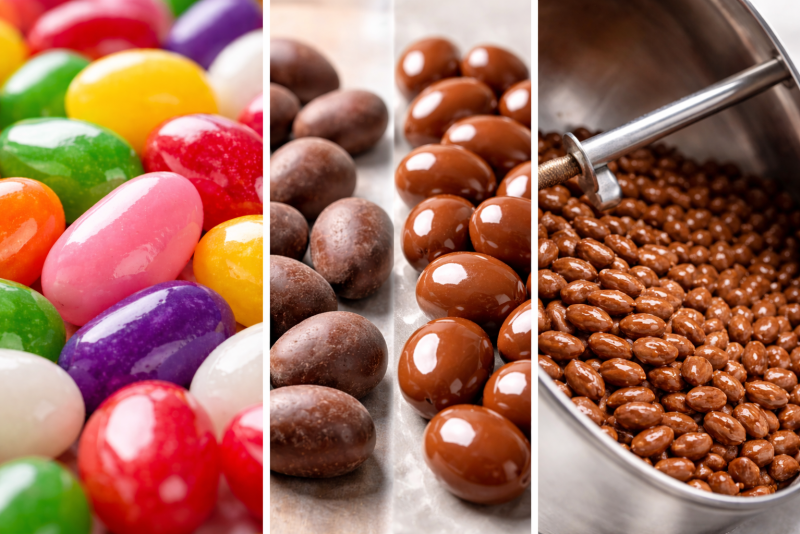
A VEGAN CONFECTIONER’S GLAZE
Shellac has been used in confectionery for many years to create shine and give products a smooth, protective finish. It is familiar, widely used and technically effective. But for many manufacturers, it is no longer the most suitable choice.
The confectionery market is changing. Brands are paying more attention to ingredient transparency, vegan product development and the overall story behind a product. Retailers and consumers are asking more questions, and manufacturers are increasingly looking for ingredients that fit better with modern expectations.
That is why more companies are now searching for a shellac alternative for confectionery.
A plant-based glaze offers an alternative that helps deliver the glossy appearance and protective coating manufacturers are looking for, while supporting a more future-focused ingredient strategy.
If you are looking for a vegan confectioner’s glaze for sweets, jelly beans, chewing gum or chocolate-coated products, a plant-based option is a strong alternative worth considering.
Contact us about vegan confectionary glaze
This page focuses specifically on vegan confectionery glaze for sweets, chewing gum, jelly beans, dragees and coated confectionery products. If you are looking for a plant-based coating for fresh produce, see our separate page about coating for fruit and vegetables.
WHY CONFECTIONERY MANUFACTURERS ARE MOVING AWAY FROM SHELLAC
For a long time, shellac was simply accepted as part of confectionery coating systems. Today, that is changing.
Manufacturers are not only evaluating performance anymore. They are also looking at whether an ingredient still fits the direction of the business, the expectations of the customer and the positioning of the end product.
That is where shellac increasingly raises questions.
It may still provide gloss and protection, but for many confectionery brands it no longer matches the move toward plant-based innovation, clearer ingredient communication and more transparent product development.
WHAT IS THE PROBLEM WITH SHELLAC?
Shellac is insect-derived
Although shellac is often described as a natural glaze, it is not plant-based. It is derived from the resin secreted by the lac insect. For manufacturers that want to avoid animal-derived ingredients, this is an obvious drawback.
Shellac can limit vegan positioning
More confectionery products are being developed for vegan, plant-based or animal-free ranges. In that context, shellac can become a weak point in the formulation. Even when it performs well technically, it may not support the positioning of the final product.
Shellac can make ingredient communication more difficult
Many brands want ingredient lists and product stories that are easier to explain. Terms such as shellac, confectioner’s glaze or E904 can create questions that a plant-based alternative may help avoid.
Shellac does not always match modern consumer expectations
Consumers are paying closer attention to ingredients and sourcing than they used to. In confectionery, where trust, brand feeling and product appeal play a major role, an insect-derived glaze may not be what a brand wants to stand behind.
Shellac may not fit the direction of future product development
For brands working on premium positioning, conscious products, vegan innovation or cleaner ingredient communication, shellac can feel increasingly out of place.
EXTRA REASONS TO CHOOSE A SHELLAC ALTERNATIVE
Moving away from shellac is not only a matter of ethics. For many confectionery manufacturers, it is also a practical and commercial decision.
Better fit for vegan and plant-based innovation
A plant-basedn glaze aligns far better with vegan confectionery development than an insect-derived coating.
Easier to support a transparent ingredient story
Plant-based coatings are generally easier to explain in a product concept focused on clarity, transparency and modern ingredient choices.
Stronger fit with changing market expectations
Many brands are reviewing ingredients that may create unnecessary questions or objections. A shellac alternative can help simplify that discussion.
More suitable for premium and conscious brands
For brands built around quality, innovation, sustainability or lifestyle preferences, a plant-based glaze can support a stronger overall product story.
Better aligned with future assortment strategy
A shellac alternative can help make both existing products and new developments more relevant to where the confectionery market is heading.
WHERE SHELLAC IS USED IN CONFECTIONERY
Shellac is commonly used in a wide range of confectionery products, including:
- hard candies
- jelly beans
- chewing gum
- chocolate-coated nuts
- chocolate-coated fruits
- dragees
- sugar-coated confectionery
- sprinkles and decorative toppings
These are also the kinds of products in which a corn protein glaze can offer value as a shellac replacement.
WHAT A GOOD CONFECTIONERY GLAZE MUST DO
A shellac alternative has to do more than simply remove an ingredient. It must also work in practice.
A good confectionery glaze should help provide:
- an attractive glossy finish
- surface protection
- reduced stickiness
- support during handling and packaging
- suitability for industrial application methods
- compatibility with confectionery production processes
That is why manufacturers are not just looking for a vegan claim. They are looking for a coating that performs well and fits the market more naturally.
How plant-based glaze performs in confectionery production
A confectionery glaze is not only used to create shine. In industrial confectionery production, the coating also has to support handling, packaging and product appearance during the full process.
A plant-based glaze can be relevant where manufacturers need the following:
- a glossy finish on panned sweets and coated products
- reduced stickiness during handling and packing
- a smoother surface on sugar-coated confectionery
- support for visual appeal in retail packaging
- a plant-based alternative to shellac / E904
- a coating that fits vegan and modern ingredient positioning
This makes plant-based glaze especially relevant for producers of jelly beans, dragees, chewing gum, hard candies, coated nuts, chocolate-coated raisins and decorative confectionery products.
Use in panning, polishing and coated confectionery
Many confectionery products require a final surface treatment after panning, polishing or coating. The glaze has to create an attractive finish without making the product difficult to handle.
For products such as jelly beans, dragees and sugar-coated sweets, the surface finish influences how the product looks, feels and behaves during packaging. A plant-based glaze can help manufacturers replace shellac while keeping the focus on gloss, protection and process suitability.
For chocolate-coated nuts, fruits and similar products, the coating can also support surface quality and reduce handling issues during packing and transport.
THE ALTERNATIVE TO SHELLAC: A PLANT-BASED GLAZE FOR CONFECTIONERY PRODUCTS
Plant-based glaze is an alternative to shellac for confectionery applications. It helps create a glossy appearance and a protective coating layer while supporting a more modern formulation strategy.
For manufacturers, that means it is possible to move away from an insect-derived glaze without giving up the look and function expected from a confectionery coating.
In other words, plant-based helps combine performance with a product story that is easier to defend and easier to market.
Key advantages of corn protein glaze
- Vegan
- Plant-based
- Non-GMO
- OU Kosher
- Gluten-free
- Lactose free
- Bio-based
- Biodegradable
WHY PLANT-BASED GLAZE IS A STRONG ALTERNATIVE TO SHELLAC
Attractive glossy finish
Appearance matters in confectionery. Consumers often associate shine with freshness, quality and visual appeal. Corn protein glaze helps create that attractive finish.
Product protection
A glaze does more than improve appearance. It also helps protect the surface of confectionery products during processing, packaging, transport and storage.
Better fit for vegan confectionery
For manufacturers creating vegan sweets or reviewing existing product formulations, plant-based glaze is a more natural fit than shellac.
Better fit for modern brand positioning
A plant-based glaze supports a more transparent, more current and more future-oriented product message.
APPLICATIONS OF PLANT-BASED GLAZE
Plant-based glaze can be relevant for a wide range of confectionery applications.
Hard candies
For a glossy finish and protective layer on hard sweets and sugar confectionery.
Jelly beans and dragees
For smooth appearance, visual appeal and coating performance.
Chocolate-coated products
For nuts, raisins, fruits and similar products where both appearance and handling are important.
Chewing gum
For a polished outer finish and product protection.
Decorative confectionery
For sprinkles, toppings and coated decorative elements.
APPLICATION METHODS
Plant-based glaze can be applied through common industrial coating methods such as:
- spraying
- dipping
- brushing
- curtain coating
- enrobing
Depending on the application and the process, plant-based glaze can be supplied in forms such as:
- liquid
- ready-to-use coating
- water-soluble powder
- powder for formulation use
SHELLAC VS PLANT-BASED GLAZE
| Feature | Shellac | Plant-based glaze |
| Source | Insect-derived | Plant-based |
| Vegan fit | No | Yes |
| Ingredient story | Less straightforward | Easier to explain |
| Fit for plant-based product lines | Limited | Strong |
| Gloss | Yes | Yes |
| Protective coating | Yes | Yes |
| Product positioning | More challenging for some brands | Stronger fit |
| Future-focused innovation | Less suitable for many brands | Better aligned |
WHY SWITCHING MAKES COMMERCIAL SENSE
Choosing a shellac alternative is not only about replacing one ingredient with another. It is about making a better long-term choice for product development and brand positioning.
A switch to plant-based glaze can help manufacturers:
- support vegan and plant-based confectionery development
- improve ingredient transparency
- reduce objections around insect-derived coatings
- strengthen premium and conscious product positioning
- align better with current and future market expectations
- build a more future-ready confectionery portfolio
For manufacturers that want both functionality and a stronger commercial story, corn protein is a logical alternative to shellac.
READY TO SWITCH FROM SHELLAC?
Are you looking for a shellac alternative for confectionery products? Interested in a vegan, plant-based glaze for sweets, jelly beans, chewing gum or chocolate-coated products?
We help confectionery manufacturers explore the right coating solution for their product, process and market goals.
Request information about plant-based glaze
FAQ
Can plant-based glaze replace shellac / E904 in confectionery?
Plant-based glaze can be considered as a plant-based alternative to shellac / E904 in suitable confectionery applications. The right solution depends on the product, desired gloss, coating method and production process.
Is plant-based glaze suitable for jelly beans and dragees?
Yes, plant-based glaze can be relevant for products such as jelly beans, dragees and sugar-coated sweets where gloss, smoothness and surface protection are important.
Can a vegan confectionery glaze reduce stickiness?
A confectionery glaze can help reduce surface stickiness and support handling during packaging and transport. The final result depends on the recipe, coating thickness, drying conditions and production process.
Can plant-based glaze be used for chocolate-coated nuts and fruits?
Yes, it can be relevant for chocolate-coated nuts, raisins, fruits and similar products where surface finish, handling and visual appearance are important.
Is plant-based glaze only useful for vegan sweets?
No. It can also be useful for premium confectionery, export-focused products, cleaner ingredient positioning and brands that want to move away from insect-derived shellac.
What should manufacturers test before switching from shellac?
Manufacturers should test gloss level, drying behaviour, stickiness, packaging performance, product stability and compatibility with their existing panning, polishing or coating process.
Confectionery glaze or fresh produce coating?
Plant-based glaze can be relevant in more than one market, but the application requirements are different.
For confectionery, the focus is usually on gloss, surface smoothness, reduced stickiness, handling and vegan ingredient positioning.
For fruit and vegetables, the focus is different: moisture loss, shelf-life support, fresh appearance, post-harvest handling and reducing reliance on shellac or plastic in suitable applications.
This page is about confectionery glaze. For fresh produce, visit our page about coating for fruit and vegetables.
LOOKING FOR THE RIGHT SHELLAC ALTERNATIVE?
Whether you are developing a vegan confectionery line, reviewing an existing coated product or exploring a more transparent ingredient strategy, we are happy to help.
Tell us more about your confectionery product and application. We will help you explore the right plant-based glaze solution.
Contact us for advice about vegan confectionery glaze
What solution are you looking for?
We are specialized in the shellac alternative confectionery glaze. Need the best products or advice? Then please leave your details and we will get in touch.


